
The United Arab Emirates (UAE) remains one of the most attractive jurisdictions for entrepreneurs and international businesses due to its strategic location, modern infrastructure, and efficient business setup processes. However, choosing the right setup route in the UAE requires more than selecting a licence and registering a company name.
In practice, the best structure depends on your business activity, target market (UAE vs international), visa requirements, banking expectations, and compliance obligations. Choosing the wrong jurisdiction (Mainland, Free Zone, or Offshore) can lead to delays, additional costs, or the need to restructure later.
This step-by-step guide explains how to set up a business in the UAE, including the key decisions you need to make at each stage — from selecting the right activity and jurisdiction to licensing, banking, and visas.
What You Need to Know First (2026)
Setting up a business in the UAE typically involves selecting the correct business activity, choosing a jurisdiction (Mainland, Free Zone, or Offshore), determining the legal structure, securing the appropriate licence, and completing operational requirements such as office space, banking, and visas. The right route depends on your commercial goals, visa needs, and compliance profile.
Introduction
Starting a business in a new country can seem difficult. However, the UAE offers a relatively efficient setup environment thanks to modern systems, structured procedures, and business-focused administration. In this guide, we explain the key steps involved in setting up a business in the UAE – so you can make better decisions and prepare properly at each stage.
Step-by-Step Guide to Set Up a Business in the UAE
Step 1: Choose a Business Activity
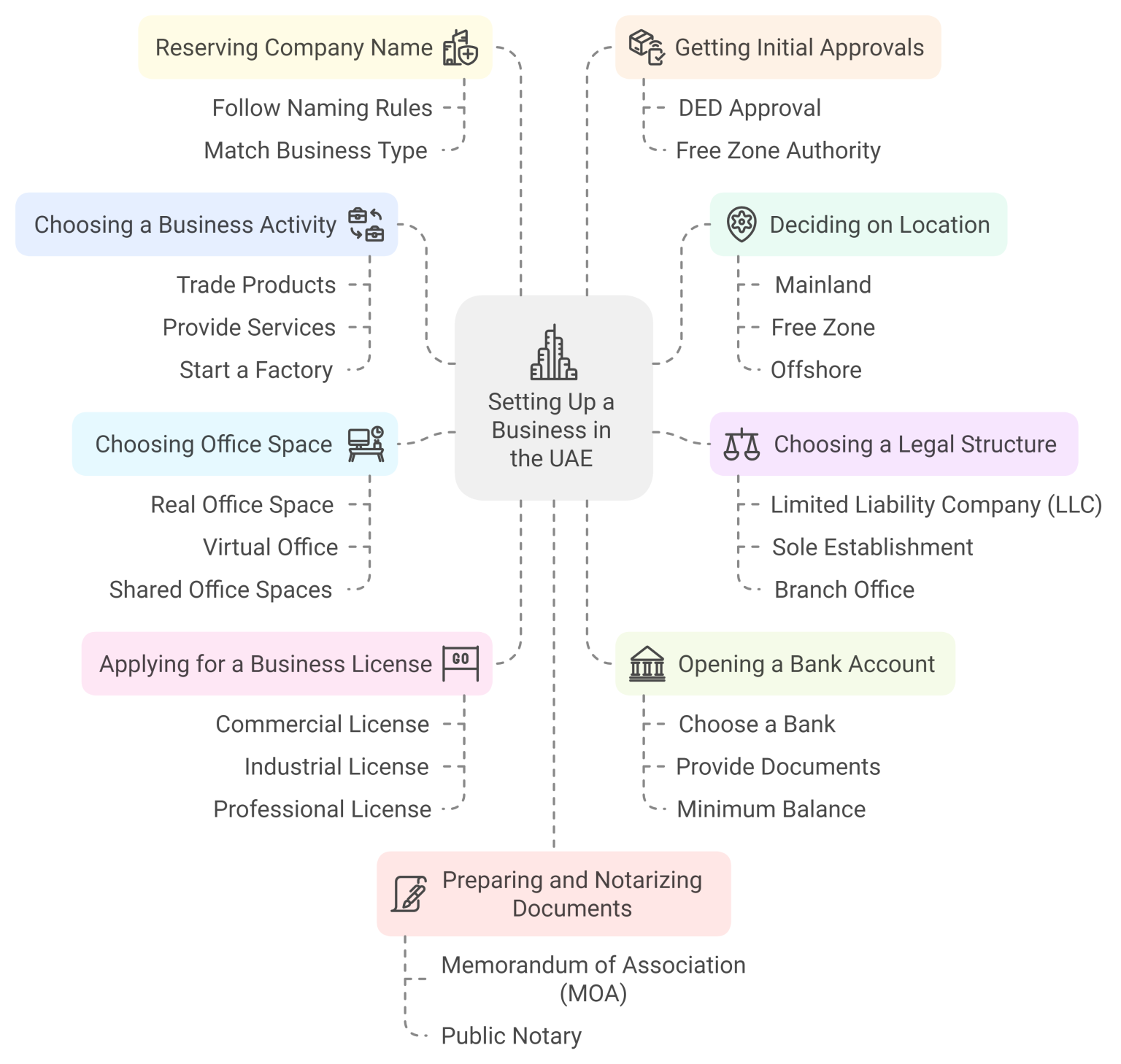
First, you need to decide what type of business you want to run. The type of business you choose will affect the license you need and the rules you must follow. Whether you want to trade products, provide a service, or start a factory, choosing the right type of business is very important. For more details on business activities and licenses, visit the Department of Economic Development (DED) website.
Step 2: Choose Between Mainland, Free Zone, or Offshore in the UAE
Next, you need to decide where to set up your business in the UAE. In most cases, this means choosing between Mainland, Free Zone, or Offshore. This is one of the most important decisions in the setup process because it affects your market access, licensing options, office requirements, visa eligibility, and ongoing compliance obligations.
- Mainland: This option is generally suitable if you want to operate directly in the UAE market, work with local clients, or scale across the UAE without structural limitations.
- Free Zone: Free zones often offer streamlined incorporation, 100% foreign ownership, and flexible setup packages. However, suitability depends on your business model, target customers, and the specific free zone’s rules and permitted activities. Learn more in our guide on Corporate Structuring in the UAE.
- Offshore: This is usually used for international holding or asset-owning structures and businesses that do not require a physical operating presence in the UAE market.
Before choosing a jurisdiction, it is important to assess your commercial model, banking plans, and visa requirements — not just the headline setup cost.
Mainland vs Free Zone vs Offshore (Quick Comparison)
| Criteria | Mainland | Free Zone | Offshore |
|---|---|---|---|
| Best for | Businesses targeting the UAE domestic market | International businesses, startups, service providers, and companies seeking streamlined setup | International structures not requiring UAE operational presence |
| UAE market access | Broad | Depends on structure and operating model | Limited / generally not for direct UAE operations |
| Office requirement | Typically required (depends on activity/authority) | Flexible options often available (e.g., desk/shared office packages) | Usually no operational office in the UAE market |
| Visa options | Available (subject to package/eligibility) | Usually available (depends on package/free zone) | Typically not the primary purpose |
| Typical use case | Trading, services, operational businesses in the UAE | Consulting, tech, e-commerce, international services | Holding structures, asset ownership, international structuring |
Important: The correct option depends on your business activity, customer base, banking expectations, and compliance profile. A lower setup cost does not always mean the best long-term structure.
Step 3: Choose a Legal Structure
After deciding on the location, you need to pick the legal structure of your company. Common options include:
- Limited Liability Company (LLC): This structure is popular for most businesses in the mainland.
- Sole Establishment: It is good for people offering services on their own.
- Branch Office: This type is suitable for existing companies that want to expand to the UAE.
Each structure has different legal, operational, and compliance implications, so it is important to choose a format that supports both your current needs and future plans.
Step 4: Reserve Your Company Name
Then, you need to choose and reserve a name for your business in the UAE. The name must follow certain rules—such as no bad language, no reference to religion, and it cannot be the same as another registered business. Also, the name should match the type of business you are doing. Therefore, take time to think about a name that represents your brand well.
Step 5: Get Initial Approvals
After reserving the name, you need to get approvals from the authorities before moving ahead. This includes getting approval from the Department of Economic Development (DED) or the free zone authority. At this stage, you will submit details about your business, its owners, and the name you chose. Once you have these initial approvals, you can move to the next steps.
Step 6: Prepare and Notarize Documents
After you get the initial approval, prepare important documents like the Memorandum of Association (MOA). These documents show who owns the company and how it will be managed. You must have these documents signed and approved by a public notary so that your business can move forward legally. Without notarized documents, you cannot register your company.

Step 7: Choose an Office Space
Office and address requirements in the UAE depend on the jurisdiction, licence type, and business activity. In many cases, you will need an office address or an eligible facility arrangement to complete the incorporation and licensing process.
Free zones often provide flexible options (such as shared desks or office packages), which can be suitable for startups and early-stage businesses. However, the right choice should align with your operational needs, visa plans, and licensing conditions.
Step 8: Apply for the Correct UAE Business Licence
Once the earlier setup steps are completed, you can apply for the business licence that matches your activity and jurisdiction. Common licence categories include:
- Commercial License: For trading goods.
- Industrial License: For manufacturing or production.
- Professional License: For service-based businesses like consulting.
The application process might be a little different depending on where you set up. However, you will need to provide documents like the MOA, office lease, and details about the owners. After you collect all the required documents, submit them to the relevant authority.
Step 9: Complete Post-Licensing Registrations (as Applicable)
After receiving your business licence, you may need to complete additional registrations depending on your jurisdiction, business activity, and operational requirements. These may include registration with relevant authorities, chambers, tax authorities (where applicable), or sector-specific bodies.
The exact post-licensing requirements vary, so it is important to verify what is required for your specific setup to ensure your business is fully operational and compliant.
Step 10: Open a Bank Account
Opening a business bank account is very important to manage your money. The process includes choosing a bank, providing documents like your trade license and owner details, and completing the bank’s compliance and due diligence checks (KYC). Depending on the bank and business profile, you may be asked for additional documents, such as proof of business activity, source of funds, or a business plan. Some banks may require a minimum balance. For more information, check out our Bank Account Opening Services. Once your bank account is open, you will be able to manage your business finances more easily.
Bank account opening timelines and requirements can vary significantly between banks, so early preparation is strongly recommended.
Step 11: Apply for Visas
Finally, after your company is set up, you can apply for investor visas for yourself and employee visas for your staff. The UAE offers these visas so that business owners and workers can live and work in the country. You need to submit documents, take a medical test, and complete biometric verification. Once the visas are approved, you and your employees can start working in the UAE. Learn more about Immigration / Visa services in the UAE.
Tips for Entrepreneurs Setting Up a Business in the UAE
- Choose the Right Sponsor or Agent: If you are setting up a mainland business, you may need a local sponsor. Therefore, you should choose someone who has a good reputation and knows your industry well. This will help you avoid future problems.
- Understand the Costs: It is also important to budget for setup costs, license fees, visa expenses, and office rent. Also, having a clear understanding of these costs will help you plan better.
- Stay Compliant: The UAE has important compliance obligations for businesses, which may include AML/KYC requirements, corporate tax registration and filings, VAT obligations (where applicable), and other regulatory requirements depending on the business activity and jurisdiction. Working with a professional firm can help you stay compliant, avoid delays, and reduce the risk of penalties. Always verify the latest requirements before and after incorporation.
Common Mistakes to Avoid When Setting Up a Business in the UAE
- Choosing a jurisdiction based only on the lowest setup cost:
The cheapest setup package may not match your operational, banking, or visa needs. - Selecting the wrong business activity:
An incorrect activity selection can create licensing issues, banking delays, or compliance problems later. - Underestimating bank compliance requirements:
Bank account opening often requires more than a trade licence. Be prepared for KYC checks and supporting documentation. - Ignoring ongoing compliance obligations:
Company setup is only the beginning. Ongoing accounting, tax, VAT (if applicable), payroll (if applicable), and renewals are essential. - Choosing a structure without considering future growth:
Your initial setup should align with your expansion plans, hiring needs, and target markets.
Conclusion
Setting up a business in the UAE can be efficient and straightforward when the structure is planned correctly from the beginning. The key is not only to complete the registration steps, but to choose the right jurisdiction, licence, and setup model for your actual business goals.
A well-planned setup can save time, reduce compliance risk, and support smoother banking, licensing, and visa processing. If you are planning to establish a company in the UAE, it is worth getting professional advice before making final decisions.
Need help with UAE company formation? IBCCS TAX supports entrepreneurs and international businesses with UAE company setup, structuring, licensing, banking coordination, and ongoing tax and compliance support.
FAQ: UAE Business Setup
- Can a foreigner own 100% of a company in the UAE?
In many cases, yes – especially in free zones and in many mainland business activities (subject to the applicable rules and activity type). The correct structure depends on the specific business activity and jurisdiction. - What is the difference between Mainland and Free Zone in the UAE?
Mainland is generally preferred for direct access to the UAE local market, while free zones are often chosen for streamlined setup and international operations. The right choice depends on your business model, visa needs, and target customers. - How long does it take to set up a business in the UAE?
The timeline depends on the jurisdiction, activity, approvals, and document readiness. Simple setups may be completed relatively quickly, while regulated or more complex structures can take longer. - Do I need an office to register a company in the UAE?
Office/facility requirements depend on the jurisdiction, licence type, and activity. Some jurisdictions offer flexible office solutions, while others require a more formal lease arrangement. - Can I open a UAE business bank account remotely?
Requirements vary by bank and business profile. In many cases, banks require compliance checks and may request in-person steps or additional documentation. - Do I need a visa to own a company in the UAE?
Not always to own the company itself, but visas are usually needed if you intend to live and work in the UAE. Visa eligibility depends on the company setup and package. - Do I need VAT registration in the UAE from day one?
Not in every case. VAT registration depends on your taxable supplies and whether the mandatory registration threshold is met (or whether voluntary registration is appropriate). - What are the key ongoing obligations after company formation?
Typical obligations may include licence renewals, accounting, corporate tax compliance, VAT (if applicable), payroll (if applicable), and other regulatory filings depending on your business activity and jurisdiction.






IBCCS TAX Celebrates 11 Years of International Tax & Business Advisory
Time really does move fast – it feels like we’ve
Read More
ZERO TAX for UAE Residents? How to Legally Use Foreign Companies (Cyprus, Malta, Georgia & More!)
Tax Planning for UAE Residents: How to Optimize Your Business
Read More
How to Choose the Best Business Structure in the UAE: A Complete Guide for Entrepreneurs
Introduction Starting a business in the UAE has many opportunities.
Read More